Today we were lucky enough to grab tickets to the Charles R Mackintosh exhibition currently on at the Walker Art Gallery. I have been meaning to go for a while so was happy to wander down for an hour or so of wandering round his works. I’ve never known much of his personal life and only know small aspects of his work, mainly around his illustrations and commissioned works.
It was quite a surprise to discover his influences on architecture and furniture designs, some of which I really liked. A few pieces that I was quite blown away by in particular, dotted around, were his actual design stencils, used and grubby, showing how he created the symmetrical/repeated patterns he often did. Although his unusual works were interesting and were well paired alongside other artists of similar style, who had taken influence from him, they weren’t always my cup of tea; I much prefer illustration.
There was a beautiful collection of illustrated book covers, both published and unpublished which really stood out to me, as the line work was so small and intricate that straight lines made the detail look immense. Similarly to these images but on a much larger scale were four large portrait designs for the Glasgow Institute of the Fine Arts and The Scottish Musical Review. These images were each around 7ft tall, towering above me on the wall. Each one had a figure feature, elongated and linier. I really loved these, as they are a style I have always admired and often delved into within my own work; I often work in fineliner using bold linier motions and styles to dictate the subject. Seeing these vast images today has really inspired me to return to the drawing board and get going with my own artwork again, perhaps even delving into the world of calligraphy as Mackintosh does. I spent a while with these large images, and on close inspection I saw the rough pencil lines underneath the black painted outlines. This made these painting much more achievable and natural the the viewer.
Some of his earlier studies showed aspects of his final style but in a much looser, uncontrolled style.
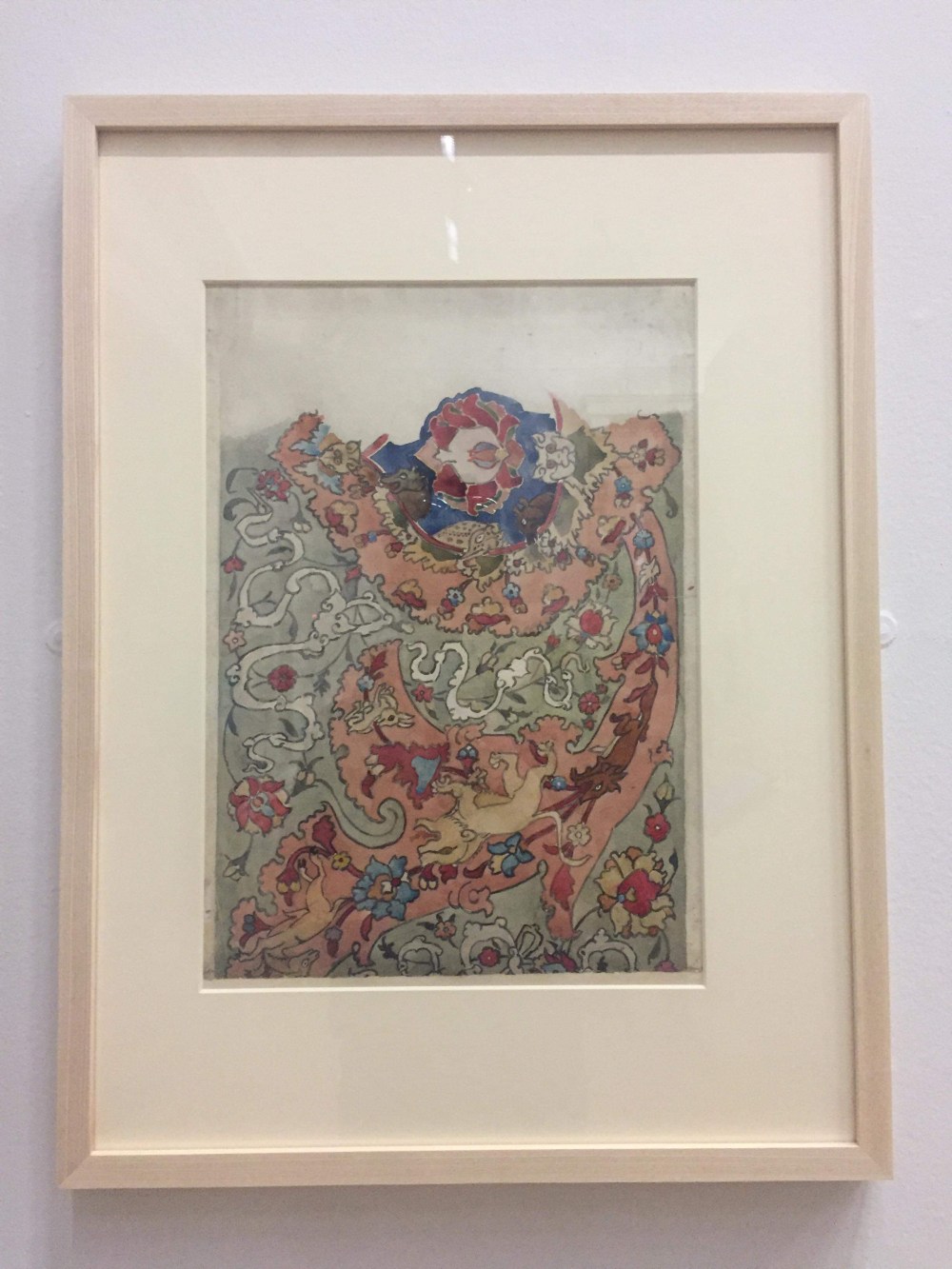
Mackintosh, C. 1891. Pencil and watercolour study. [Watercolour on canvas] Glasgow, Scotland.
This ‘Pencil and watercolour study’ from around 1891 shows a clear knowledge of his materials with a slight uncertainty of his subject, most likely because his subject was a Persian rug, something with its own abstract pattern.
From this visit I also discovered his involvement with the Liverpool cathedral design and architecture as it would appear he offered his architectural knowledge and designs up for consideration. It was quickly critiqued as ‘a very clever gothic essay’ with its vast decorative stone carvings and stained glass windows of grandeur. It was clear that his Glaswegian style was not yet accepted by the Liverpool standards, and was met with distant and his designs did not go further.
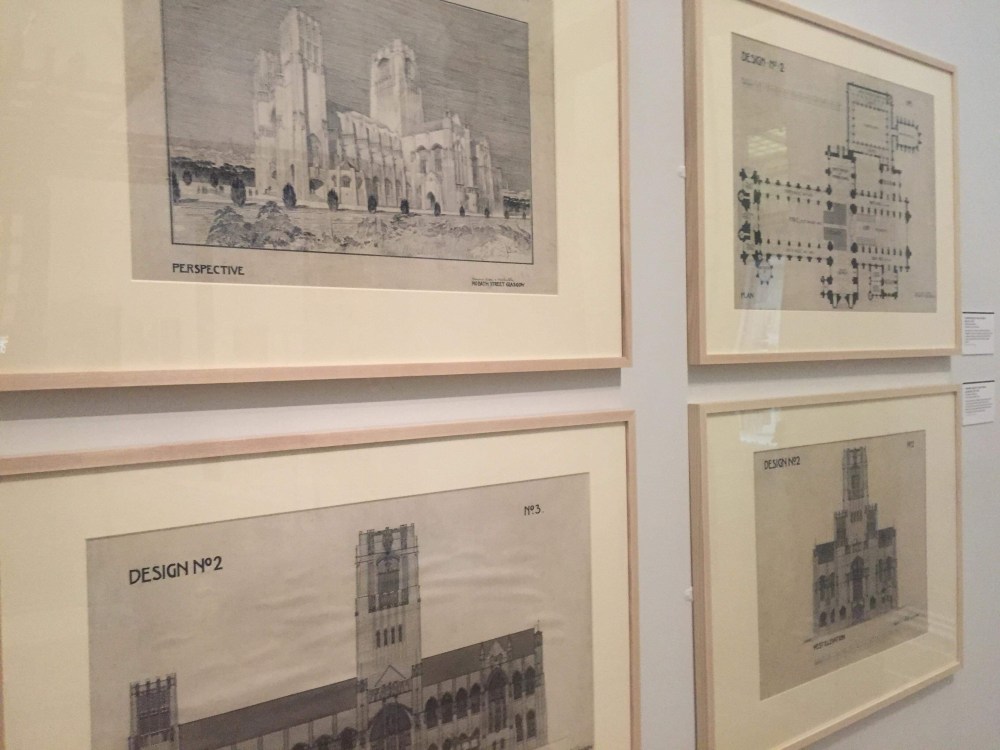
It was an interesting exhibit of a vast variety of objects and his legacy was made clear as something that remains strong, particularly in Glasgow, as well as through architecture and design nowadays.

 HXLLISON ART HISTORY